
1. Executive Summary
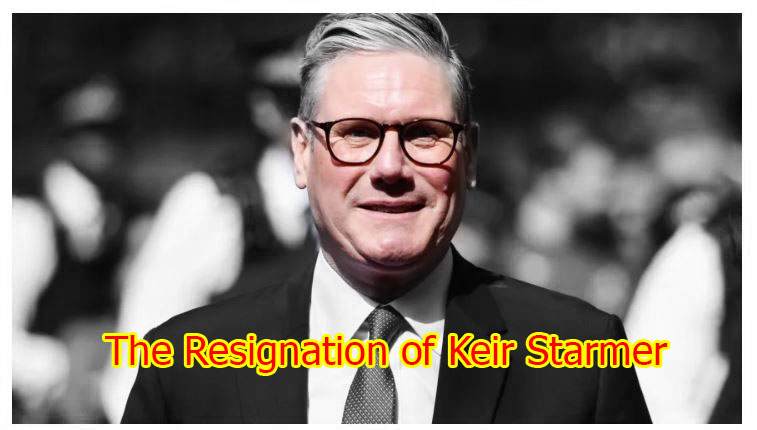
On June 22, 2026, British Prime Minister Keir Starmer formally tendered his resignation as both leader of the ruling Labour Party and head of His Majesty’s Government. This monumental decision marks the abrupt conclusion of a turbulent premiership that began with high expectations following a historic electoral landslide in July 2024. Starmer’s departure comes in the wake of catastrophic local election results, compounding macroeconomic distress, deeply entrenched internal party schisms, and a series of high-profile ministerial resignations that ultimately rendered his legislative agenda unworkable and his executive authority untenable.
This comprehensive intelligence report delivers a granular examination of the circumstances precipitating Starmer’s downfall, providing an expansive biography of his political and pre-political career, detailing his ultimate 10 Downing Street address, evaluating the leading candidates poised to succeed him, and analyzing the constitutional mechanisms that will govern the selection of the United Kingdom’s next prime minister without an immediate general election.
2. The Genesis of Crisis: The Trajectory to Resignation
2.1 The Electoral Mandate of 2024 and Early Friction
To understand the magnitude of Keir Starmer’s resignation, one must examine the baseline of his governance. In July 2024, Starmer engineered a sweeping electoral victory for the Labour Party, ending fourteen years of Conservative Party rule. Labour secured a massive parliamentary majority, positioning Starmer as one of the most powerful incoming prime ministers in modern British history. However, political analysts quickly noted that this mandate was inherently fragile; it was built on a widespread public rejection of Tory instability rather than an overwhelming, ideological embrace of Starmer’s specific policy suite. The electorate gave Starmer a mandate to stabilize a fractured nation, but the economic landscape he inherited left virtually no margin for error.
From his earliest months in office, Starmer encountered severe fiscal headwinds. The UK economy faced structural stagnation, burdened by the long-term aftermath of the COVID-19 pandemic, supply chain disruptions linked to Brexit, and an acute energy crisis intensified by prolonged geopolitical conflicts in Eastern Europe. Starmer’s Chancellor of the Exchequer attempted to implement a series of stringent fiscal measures designed to plug holes in public finances. Unfortunately, these policies translated into prolonged public sector spending restraints, a failure to decisively resolve ongoing industrial strikes across the National Health Service (NHS), and an inability to deliver immediate relief to households struggling under a severe cost-of-living crisis. Public enthusiasm evaporated rapidly, replaced by deep cynicism as inflation outpaced wage growth.
2.2 The Catastrophic Local Elections of May 2026
The foundational stability of Starmer’s administration suffered an existential blow in the local government elections held in early May 2026. Billed by opposition parties as a definitive referendum on Starmer’s first two years in office, the results were an unmitigated disaster for the Labour Party. Across England, Scotland, and Wales, Labour suffered historic losses, shedding more than 1,000 local council seats. Crucially, areas that had formed the cornerstone of Labour’s 2024 electoral coalition voted overwhelmingly for alternative platforms.
The losses were not merely quantitative; they were deeply symbolic. Labour officially relinquished its 27-year political stronghold over the Welsh legislature, a region historically considered a safe haven for the party. Simultaneously, the populist and anti-immigration party, Reform UK, achieved unprecedented breakthroughs, capturing vast swaths of working-class municipalities across the post-industrial ‘Red Wall’ of northern England. This dual contraction—losing progressive, urban voters to the Liberal Democrats and the Green Party while bleeding working-class voters to Reform UK—triggered widespread panic within the Parliamentary Labour Party (PLP). Backbench MPs, terrified of losing their seats in the next general election, openly began questioning Starmer’s strategic viability.
2.3 Cabinet Insurgency and Ministerial Attrition
The electoral rout of May 2026 immediately destabilized Starmer’s executive cabinet. Rather than uniting behind the Prime Minister to navigate the crisis, ideological factions within the Cabinet fractured. The fatal blow to Starmer’s premiership materialized through a coordinated wave of ministerial resignations that exposed deep internal disagreements regarding national defense expenditures and social welfare allocations.
The crisis culminated last week when Defence Secretary John Healey, widely respected across all wings of the party and a vital pillar of cabinet stability, abruptly resigned. Healey issued a stinging public letter criticizing Starmer’s refusal to immediately elevate defense spending to 2.5% of GDP, arguing that the Prime Minister’s fiscal caution left the United Kingdom dangerously exposed during a period of unprecedented global instability. Within hours of Healey’s departure, Al Cairns, the Minister for the Armed Forces, tendered his resignation in solidarity. These high-profile departures triggered a domino effect across the junior ministerial ranks. By the morning of June 22, a total of 20 ministers had vacated their posts within a single week, leaving the machinery of government functionally paralyzed and forcing Starmer to recognize that his executive authority had been entirely extinguished.
3. The Final Address Outside 10 Downing Street
At 10:00 AM GMT on June 22, 2026, Keir Starmer emerged from the black door of 10 Downing Street to deliver his final address to the nation as Prime Minister. Standing before a dense crowd of journalists, political aides, and onlookers, Starmer appeared visibly weathered but maintained a resolute, dignified demeanor. His speech was a calculated mix of constitutional duty, policy defense, and raw personal reflection.
| “The question my party is asking now is whether I am best placed to lead us into the next election. I have heard the answer… and I accept that answer with good grace. Every decision I have made has been about putting the country I love first. I will resign as leader of the Labour Party.” |
Starmer used the middle portion of his address to mount a defense of his legislative record. He highlighted his government’s structural investments in green energy infrastructure, the initial steps taken to establish Great British Energy, and his unwavering diplomatic and military support for international democratic alliances. He argued that history would judge his administration more kindly than the contemporary press, asserting that he had successfully restored institutional decency to the office of Prime Minister after years of ethical scandals under previous administrations.
The most poignant moment of the address occurred at its conclusion. Transitioning away from statecraft, Starmer’s voice cracked noticeably as he addressed the profound toll that public service had extracted from his private life. He spoke candidly about his two children and the immense difficulties they faced growing up under the relentless, intrusive glare of the public spotlight. In a deeply moving final remark, he stated that having stepped down from the largest and most demanding job in the nation, his primary, non-negotiable duty was now to return to his family—to be a devoted husband to his wife, Vic, and a reliable, present father to his children. With those words, he turned and re-entered 10 Downing Street, effectively concluding his public life.
4. The Succession Landscape: The Ascendancy of Andy Burnham
4.1 ‘The King of the North’ and the Westminster Re-entry
The immediate question dominating British politics is who will succeed Keir Starmer. The undisputed frontrunner is Andy Burnham, the charismatic former Mayor of Greater Manchester. Universally referred to across the British media landscape as ‘The King of the North,’ Burnham has spent the last decade cultivating a massive, cross-partisan political brand outside the traditional Westminster bubble. As mayor, he routinely challenged both Conservative and Labour national leadership, establishing himself as a fierce champion for regional economic devolution, integrated public transit, and comprehensive social housing initiatives.
Because British constitutional convention dictates that a Prime Minister must be a sitting member of either the House of Commons or the House of Lords, Burnham’s path to the premiership required a calculated, rapid re-entry into parliamentary politics. This occurred last week via a strategically managed by-election in the safe Labour constituency of Makerfield. Burnham secured a resounding victory, officially returning to the House of Commons as an MP just days before Starmer’s formal resignation. This immaculate timing confirmed to political insiders that a well-coordinated plan had been executed behind the scenes to facilitate a seamless transition of power.
4.2 Consolidation of Party Support
Following Starmer’s exit speech, Burnham wasted no time confirming his intention to run for the party leadership, issuing a statement emphasizing the need for an ‘orderly, swift, and responsible transition’ to protect the country’s economic stability. Crucially, the expected internal opposition to Burnham collapsed almost instantly. Health Secretary Wes Streeting, a powerful figure representing the centrist, metropolitan wing of the party who had long harbored leadership ambitions, released a public statement withdrawing himself from contention. Streeting explicitly endorsed Burnham, stating that the sheer scale of the challenges facing the country required total alignment behind a leader capable of bridging the geographic divide between the industrial north and the affluent south. This endorsement effectively neutralized a protracted, ideologically divisive internal civil war within the Labour Party.
5. Constitutional and Procedural Mechanisms of Succession
A point of confusion for international observers is how the United Kingdom can replace its head of government without triggering an immediate, nationwide general election. Under the British Westminster system, the electorate does not vote directly for a chief executive. Instead, citizens cast ballots for localized Members of Parliament. The leader of the political party that commands a working majority in the House of Commons is conventionally invited by the reigning monarch to form a government and assume the office of Prime Minister.
Because the Labour Party retains the absolute parliamentary majority it secured in 2024, the party maintains the constitutional authority to replace its internal leader. The timeline and mechanism of this transition depend entirely on whether Burnham’s candidacy remains uncontested:
| Succession Scenario | Procedure & Anticipated Timeline |
| Uncontested Consensus (Coronation Scenario) | If the Parliamentary Labour Party achieves total consensus and no rival candidate secures the necessary nominations to trigger a ballot, Andy Burnham will be formally declared leader within days. Following a formal audience with King Charles III at Buckingham Palace, he would assume the premiership by late July 2026. |
| Contested Leadership Contest (Internal Ballot Scenario) | Should a challenger from the left-wing or centrist factions emerge, the party will initiate an internal election. This process involves a ballot of parliamentary MPs followed by a vote among the broader national party membership. Under this scenario, Starmer will remain as a caretaker Prime Minister through the summer, with the new leader announced in September 2026. |
6. Comprehensive Biography of Keir Starmer
6.1 Early Life, Education, and Legal Career
Keir Rodney Starmer was born on September 2, 1962, in Southwark, London, but grew up in the small town of Oxted in Surrey. His upbringing was modest; his father, Rodney Starmer, was a dedicated toolmaker who worked long hours in a factory, and his mother, Josephine Starmer, was a nurse who battled Still’s disease, a debilitating chronic illness, for most of her life. This family environment deeply shaped Starmer’s political outlook; he was named after Keir Hardie, the historic Scottish trade unionist who founded the British Labour Party, signaling his family’s deeply ingrained socialist convictions.
Starmer displayed academic excellence early on, passing his eleven-plus exam and securing admission to Reigate Grammar School. He became the first member of his immediate family to graduate from university, earning a First-Class Bachelor of Laws (LLB) degree from the University of Leeds in 1985. He subsequently undertook postgraduate legal studies at the University of Oxford, completing a Bachelor of Civil Law (BCL) at St Edmund Hall in 1986. This exceptional educational foundation paved the way for a highly distinguished career in the legal sector.
Entering the legal profession as a barrister in 1987, Starmer specialized extensively in human rights law, operating primarily out of Doughty Street Chambers. He spent over two decades representing vulnerable individuals against state power, taking on landmark cases that challenged the death penalty across Caribbean nations and fighting corporate giants in the famous ‘McLibel’ case. In 2002, his legal brilliance was recognized when he was appointed King’s Counsel (KC). From 2003 to 2008, he served as a human rights advisor to the Northern Ireland Policing Board, ensuring that policing operations complied with the newly implemented Human Rights Act.
6.2 Director of Public Prosecutions and Knighthood
In 2008, Starmer transitioned from defending individuals against the state to heading a crucial state institution. He was appointed Director of Public Prosecutions (DPP) and Head of the Crown Prosecution Service (CPS), a role he held until 2013. During his tenure as DPP, Starmer oversaw several of the most high-profile and controversial criminal prosecutions in modern British history, managing the response to the 2011 London riots, prosecuting MPs involved in the parliamentary expenses scandal, and implementing systemic reforms to better support victims of sexual violence.
His leadership of the CPS earned him widespread respect across the political spectrum for his administrative efficiency and unyielding work ethic. Upon stepping down from the role in 2014, Starmer was appointed Knight Commander of the Order of the Bath (KCB) in the New Year Honours for his exceptional services to law and criminal justice. This honor granted him the title ‘Sir,’ a designation that would later become a double-edged sword in his political career, serving as both a badge of professional competence and a target for populist critics attempting to paint him as a detached member of the legal establishment.
6.3 Parliamentary Ascent and Shadow Cabinet Service
Starmer transitioned to formal politics ahead of the 2015 general election, securing election as the Member of Parliament for the safe London constituency of Holborn and St Pancras. He arrived in Westminster with a formidable reputation, instantly marking him as a future leadership contender. Following the election, he was appointed Shadow Immigration Minister by newly elected Labour leader Jeremy Corbyn. However, Starmer resigned from this post in June 2016 alongside numerous colleagues in a coordinated protest against Corbyn’s perceived lack of leadership during the Brexit referendum campaign.
Despite this friction, Corbyn reappointed Starmer to the Shadow Cabinet in October 2016 as Shadow Secretary of State for Exiting the European Union. In this highly complex role, Starmer spent three years meticulously scrutinizing the Conservative government’s Brexit negotiations. He advocated forcefully for a second referendum on any final withdrawal agreement and insisted that the UK maintain close economic alignment with the European Single Market. This position endeared him to the party’s massive, pro-European membership base, though it alienated many traditional working-class Labour voters in the north who had voted overwhelmingly to leave the European Union.
6.4 Leadership of the Labour Party (2020–2024)
Following Labour’s historic defeat in the December 2019 general election, Jeremy Corbyn resigned, triggering a leadership contest in early 2020. Starmer ran on a platform that promised to retain the progressive economic core of Corbyn’s manifesto while restoring professional competence, managerial efficiency, and electoral credibility to the party. In April 2020, Starmer secured a decisive victory, winning the leadership on the first round of voting with 56.2% of the vote.
Starmer’s leadership strategy was defined by a ruthless, systematic purge of the party’s radical left-wing faction. He suspended Jeremy Corbyn from the parliamentary party following disputes over anti-Semitism reports, marginalized prominent left-wing frontbenchers, and abandoned several socialist policy pledges, including the nationalization of utility companies. He systematically repositioned Labour as a pro-business, fiscally disciplined party dedicated to national security and economic stability. While this strategy alienated progressive activists, it successfully reassured centrist voters and corporate donors, setting the stage for the party’s triumphant return to government in July 2024.
7. Deep Dive: Key Decisions and Controversies of Starmer’s Premiership
7.1 Fiscal Policy and the Abandonment of Pledges
Once inside 10 Downing Street, Starmer’s governing philosophy was characterized by intense fiscal pragmatism that frequently drew charges of political opportunism. His most controversial economic decision was the systematic scaling back of Labour’s signature £28 billion-a-year Green Prosperity Plan. Originally designed to fund a massive state-led transition to renewable energy, Starmer dramatically curtailed the funding mechanism, arguing that the dire state of the public finances inherited from the Conservatives made such borrowing irresponsible. This decision deeply fractured his relationship with environmental advocacy groups and the progressive wing of his own party, who viewed it as a betrayal of his climate commitments.
Furthermore, his administration’s refusal to lift the controversial two-child benefit cap—a welfare restriction introduced by previous Conservative governments—became a source of immense internal friction. Left-wing Labour MPs openly rebelled against the policy, arguing that maintaining the cap directly contributed to rising child poverty rates across post-industrial towns. Starmer’s unyielding stance on this issue demonstrated his determination to project fiscal discipline to international financial markets, but it cost him significant moral authority among his core supporters.
7.2 Geopolitical Alignment and Defense Expenditure
In foreign affairs, Starmer pursued an unswerving policy of total alignment with the United States and NATO. He maintained robust, uninterrupted military and financial aid packages to Ukraine, positioning the United Kingdom as a leading European bulwark against foreign territorial aggression. However, his foreign policy was severely tested by escalating conflicts in the Middle East. Starmer’s initial refusal to call for an immediate, unconditional ceasefire in Gaza during late 2024 and early 2025 deeply alienated Britain’s progressive left and Muslim communities, leading to substantial electoral damage in local municipal contests where independent pro-Palestinian candidates successfully unseated long-standing Labour politicians.
The final undoing of his foreign policy consensus arrived internally. His insistence on pegging British defense spending to an unspecified ‘long-term fiscal path’ rather than immediately committing to an absolute target of 2.5% of GDP created an insurmountable rift with his military leadership. As global security dynamics worsened in early 2026, this fiscal caution was interpreted by defense hawks within his own cabinet as a failure of national leadership, directly culminating in the resignations of John Healey and Al Cairns that destroyed his government.
8. The Broad Historical Legacy of Keir Starmer
Evaluating Keir Starmer’s historical legacy is a complex task that yields radically differing interpretations depending on political perspective. To his supporters, Starmer is viewed as an exceptionally dedicated public servant who performed a vital, historic rescue mission for the Labour Party. He took over a fractured, electorally broken party in 2020 and, through sheer administrative willpower and organizational discipline, dragged it back into government within four years, ending nearly a generation of Conservative dominance. His proponents argue that his emphasis on institutional decency, adherence to the rule of law, and administrative competence provided a necessary palette cleanser for a nation exhausted by years of political drama and ethical scandals.
Conversely, his critics across both the political left and right offer a far more damning indictment. To the progressive left, Starmer is remembered as a leader who hollowed out the ideological soul of the Labour Party, securing power through a series of broken leadership pledges and running an administration devoid of transformative vision. To the political right and populist factions, he is viewed as the quintessential embodiment of a detached, technocratic legal elite—a leader who was fundamentally unequipped to handle the visceral cultural and economic anxieties of the working-class electorate. His inability to sustain his massive 2024 mandate for even two full years will be studied by political scientists as a cautionary tale regarding the limitations of managerial technocracy in an era defined by deep populist volatility.
| Political Outlook: The next Prime Minister will be the sixth person to hold the keys to 10 Downing Street in a decade. This high rate of turnover reflects a deeper, structural volatility in British politics that shows no signs of abating. While a transition of party leadership avoids an immediate general election, opposition forces are already preparing a massive public campaign to demand a nationwide vote, arguing that a third consecutive Prime Minister taking office mid-term without a direct public mandate undermines the democratic legitimacy of the British constitutional framework. |